Home practice and terrace cricket
Households enclosing a practice lane or keeping balls inside a plot boundary.
Loading page…
Practice cages and boundary nets for cricket, sized to the plot and bowling length you actually use.
Quotation after site review · Material and spacing confirmed on measurement
Photo estimate
First step
Send opening photos for early guidance
Measured quote
Before work
Final price after site measurement
Andhra Pradesh
Service area
Statewide installation support
Clear scope
Written quote
Material, fixing and finish itemised
Quick start
Jump to the variation, the pricing explanation or the full service comparison.
Cricket practice nets are sized to bowling length, side fencing and whether the cage is indoor or open. Sports-net yarn, mesh and posts differ from balcony safety mesh. We plan around nearby houses, lighting and how many batters share the lane. Installation still depends on ground fixing and local access.
We provide installation services across Andhra Pradesh subject to site accessibility, measurements, technician availability and project requirements. Listing a place does not mean we operate a branch there.
Households enclosing a practice lane or keeping balls inside a plot boundary.
Coaches who need practice cages sized to bowling length and shared use.
Community spaces that need side and roof enclosure beyond balcony mesh.
Practice nets and ball-stop surrounds reduce balls flying into roads, parked vehicles or neighbouring terraces.
Box-cricket setups need secure side and roof or high-side containment planned for energetic play in tight spaces.
Boundary and catch nets help keep footballs within school or community grounds during regular games.
Volleyball, badminton and tennis areas benefit from planned netting that matches court use and spectator safety.
Schools need durable enclosures that tolerate daily student use and simple maintenance routines.
Academies running frequent sessions need layouts that support coaching flow and quicker repairs when damage appears.
Rooftop nets aim to contain play where ground space is limited, after structural and wind checks.
Indoor nets need clear fixing strategies on walls or ceilings so spans stay safe and usable.
Playgrounds and practice pitches that need boundary or sport-specific enclosures for student use.
High-usage practice environments where durability and repair access matter.
Society courts and open podiums that need neighbour-friendly ball containment.
Terraces considered only after slab, parapet and wind suitability reviews.
Enclosed courts needing wall, ceiling or frame-mounted net systems.
Custom outdoor courts and practice bays planned around available land and access.
Shared courts where height and mesh choices balance more than one game.
Typical installation contexts across homes and institutions in Andhra Pradesh
Lane or bay style practice setups with height and side containment planned for bowling and batting sessions.
Compact enclosed formats for energetic play, with entry points and ball-stop coverage considered together.
Goal, catch or boundary netting suited to school grounds and community fields.
Court netting and perimeter support planned for outdoor or indoor volleyball use.
Indoor or outdoor badminton surrounds and dividers matched to hall or courtyard dimensions.
Boundary and ball-stop planning around tennis courts without inventing fixed tour specifications.
Shared enclosures where primary and secondary sports are prioritised openly during design.
Durable containment for mixed student games with practical maintenance access.
Coaching-focused layouts for frequent drills, with repairability in mind.
Hall installations using suitable attachments, clearances and tensioning for indoor play.
Terrace practice or play enclosures assessed for structure, wind and neighbour safety.
Perimeter systems aimed at reducing balls leaving the property line during normal play.
Well-planned height and coverage reduce balls escaping into roads or neighbouring plots.
Enclosures help organise cricket and multi-sport practice with clearer boundaries.
Courts and rooftops rarely match catalogue kits; measurement-led design fits the site.
Attachment methods adapt to halls, playgrounds and selected terraces.
Schools and academies can align entry points and coaching flow with the net layout.
Sections and ties can be planned so damage does not always mean full replacement.
Where terraces are suitable, containment aims to reduce conflict with adjoining properties.
Quotations follow measured scope, supports and access instead of vague lump sums alone.
Cricket practice nets create a safe enclosed lane for batting and bowling at home or academy.
Box-cricket nets fit compact spaces for recreational cricket and academy side lanes.
Football nets enclose practice areas for schools, academies and private grounds.
Volleyball nets support school, academy and recreational court setups indoors and outdoors.
Badminton nets are installed for courts, academies and indoor hall practice zones.
Tennis nets support practice courts at academies, clubs and private sports areas.
Multi-sport court nets enclose shared grounds used for more than one sport.
School playground nets protect campus play areas and contain ball sports safely.
Academy practice nets are built for daily coaching with stronger posts and heavier mesh.
Indoor sports nets partition halls and contain balls for badminton, cricket drills and mixed training.
Sports net installations combine netting suited to the sport with poles, frames, cables, ties or wall anchors that hold the enclosure in shape. Outdoor systems should be discussed with sun, rain and wind in mind; indoor systems focus more on secure attachments and safe clearances. Coastal grounds may need more attention to metal supports and fasteners. We describe materials by role—containment mesh, structural supports and joining hardware—without publishing unverified diameters, mesh counts or load ratings as if they fit every court.
Match material talk to sport intensity and exposure. A lightly used residential badminton corner is not the same as a daily cricket academy bay. Ask how outdoor UV and monsoon rain were considered, and whether poles and fasteners suit coastal air if relevant. Any grade, mesh size or thickness mentioned should be treated as a site-specific recommendation to confirm—not a universal sports authority standard.
Exact material grade, cable or net spacing, fixing hardware and finish options are confirmed after on-site measurement. Published specs are indicative and may change based on building condition and safety requirements.
Decision points before you approve measurement and materials
Bowling length, side run-off and roof height drive the quote.
Open practice near houses needs honest boundary planning.
Posts and anchors depend on ground type and landlord or society permission.
Confirm sport mix and peak usage expectations.
Inspect ground, terrace or hall suitability for supports.
Assess wind, rain exposure and coastal influence where relevant.
Identify neighbour risk zones needing higher ball-stop priority.
Review access for delivery of poles and long net rolls.
Discuss maintenance ownership with school, society or academy staff.
Outline phased installation if the ground cannot close fully at once.
Honest alternatives when this product is not the best fit.
If the need is child or pet safety on a sit-out, use safety nets—not sports yarn.
Start with the sports family page when comparing cricket, box-cricket and school options.
Where it fits
Each type opens a dedicated page with planning notes for that building style.
Independent villa homes benefit from custom safety grills, terrace protection and outdoor utility installations.
Standalone houses need practical safety and utility installations suited to local construction styles across towns and cities.
School campuses benefit from playground nets, balcony safety and bird control solutions suited to student safety.
Sports academies and coaching centres need professional practice nets for cricket, football and multi-sport training.
Compare options
What each variation suits — and what it does not solve on its own.
Best for: Modern balconies and windows that need a clear view
Slim vertical stainless cables in fixed top and bottom channels. Chosen by families who want fall protection but refuse a heavy iron grill across the view.
Consider: Does not solve: birds. Cable spacing is designed for people, so pigeons still pass through — that needs netting or spikes.
View details →Best for: Family, pet and everyday fall-risk openings
Visible square mesh with flexible edge fixing. Chosen by households that need the opening closed quickly and want to know which mesh matches the reason.
Consider: Does not solve: a weak or loose railing. Netting is an added layer; it does not repair the structure it is tied to.
View details →Best for: Daily laundry in a balcony that is already busy
Ceiling rods or a pulley rail set above the usable floor. Chosen by flats where laundry currently lives on the railing and the balcony has to do several jobs at once.
Consider: Does not solve: fall protection of any kind. A hanger is a utility fitting and carries no safety role at the edge.
View details →Best for: A balcony that must stay open, usable and clear
Vertical cables tracking the railing line and corner returns. Chosen by apartment households whose balcony stays in daily use for seating, plants and drying.
Consider: Does not solve: a railing that is already loose. The cable pulls against the structure, so weak railings get fixed first.
View details →Best for: Windows that must keep opening normally
Short cable runs fixed to the window frame line. Chosen by homes where a window, not the balcony, is the reachable opening a child can get to.
Consider: Does not solve: insect entry. Cables and mosquito mesh are separate fittings competing for the same frame edge.
View details →Best for: Flats where the committee has a say in the outer look
A consistent cable line matching neighbouring balconies. Chosen by flat owners who need the association's approval and a lift booking before anyone drills.
Consider: Does not solve: an association's decision. We can supply the specification and drawing, but permission is between you and the committee.
View details →Best for: Stair voids, atriums and wide independent-home spans
Long cable runs following the structure rather than a railing. Chosen by independent-home owners with spans and voids that flats simply do not have.
Consider: Does not solve: a decorative railing upgrade. This is a barrier at the gap, not a replacement for balustrade joinery.
View details →Best for: Everyday balcony use with children, pets or bird pressure
Square mesh spanning the full opening with a roped edge. Chosen by households wanting the balcony closed quickly while it stays usable for daily life.
Consider: Does not solve: one net doing every job. Child, pet and bird briefs use different aperture and strength.
View details →Approve layout, height approach and material direction after site review.
Set out pole or fixing positions to measured marks.
Install bases, sleeves, wall anchors or frames as planned.
Erect supports and check alignment before netting.
Hang and tension nets in sections suited to the sport layout.
Form entries, partitions or overlaps agreed in the scope.
Secure ties and edges against expected play impact.
Remove installation debris from the playing surface.
Test gates or entry points for practical coaching use.
Hand over inspection points to the facility representative.
Pricing depends on measurements, material grade, required spacing, installation complexity, building height, site accessibility and total project quantity. Fixed package prices are not shown because every site differs.
Real photographs from our installation set. We do not invent city names, customer quotes or ratings on these cards.
Cities & areas
Cricket Practice Nets pages for priority cities and localities. Coverage is confirmed after site review—listing a place does not mean we operate a branch there.
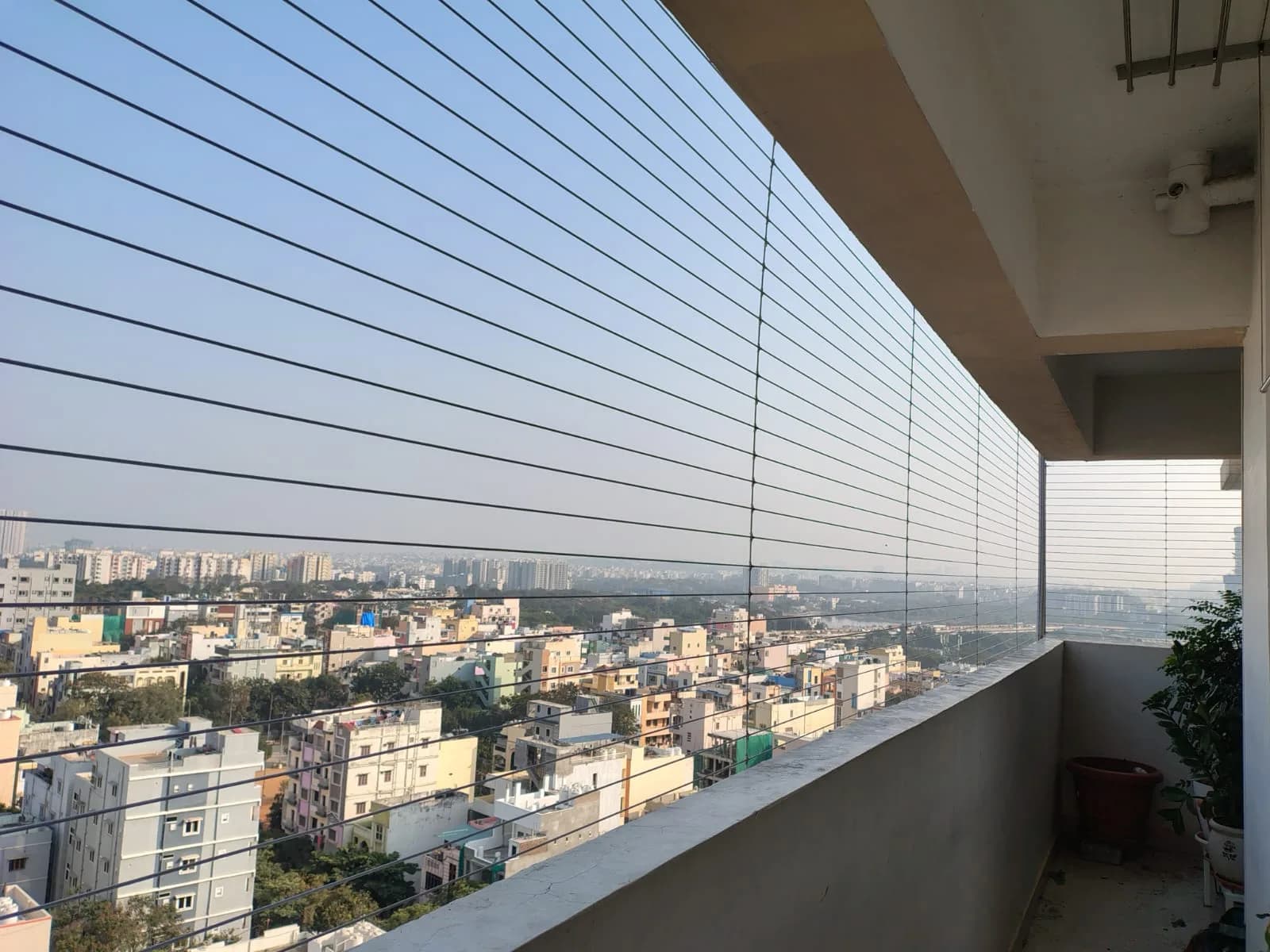
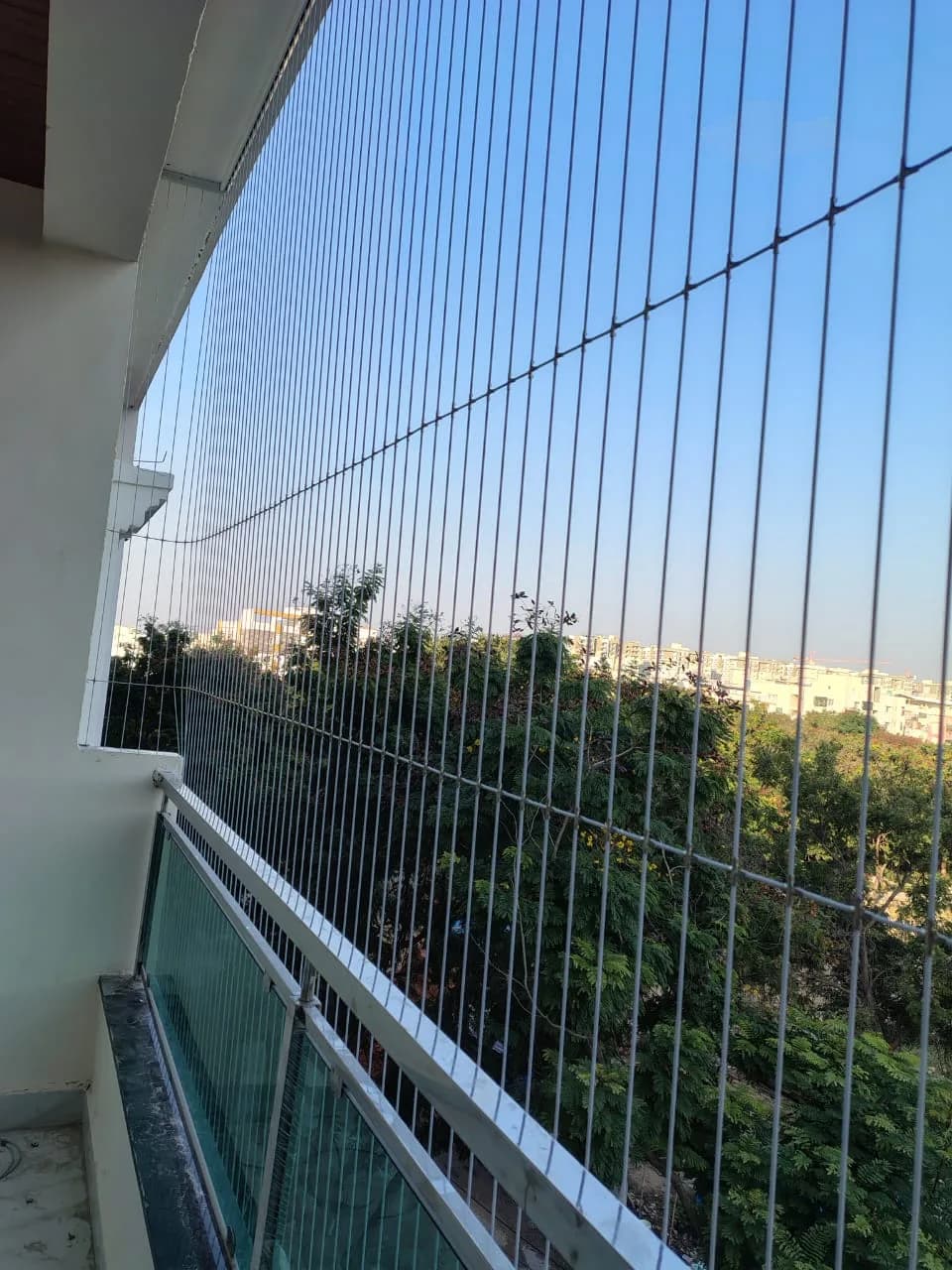
Invisible grills provide modern balcony and window safety with stainless steel strength and minimal visual obstruction.
Safety nets protect balconies, ducts, terraces and windows from fall risk and bird entry across homes and buildings.
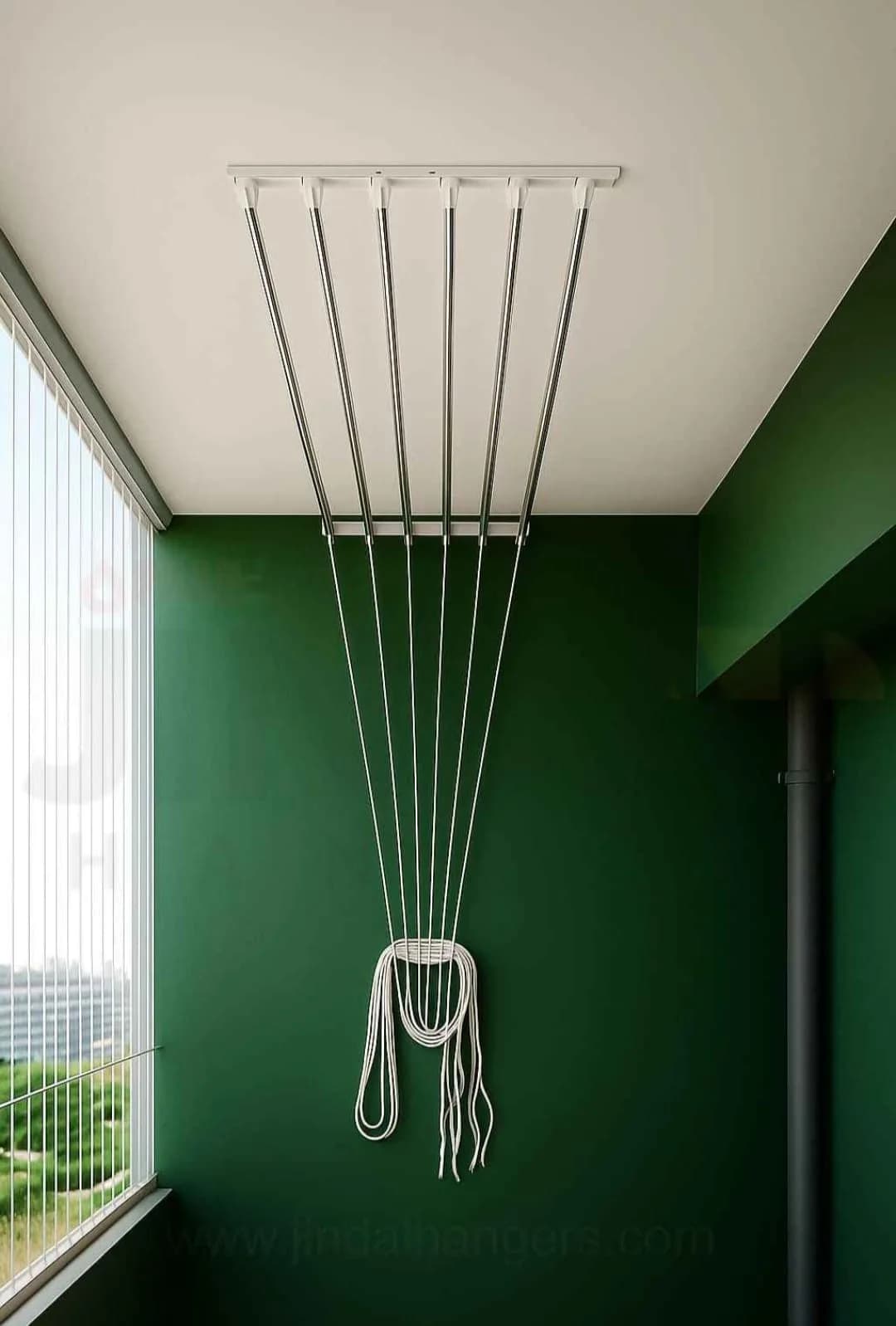
Cloth drying hangers help apartments and homes dry clothes efficiently using ceiling, pulley, wall and balcony systems.
Practical guidance related to cricket practice nets planning and installation.
Read guidePractical guidance related to cricket practice nets planning and installation.
Read guidePractical guidance related to cricket practice nets planning and installation.
Read guideUnderstand what affects installation cost before requesting a quote.
Read guideMaterial and specification notes for outdoor installations.
Read guideWhat to expect from measurement through handover.
Read guideUsage and maintenance safety information for homes and practice areas.
Read guideBackground reading that makes a site visit more productive.
Share your city, property type and opening photos for Cricket Practice Nets. We confirm availability after reviewing your site.
Pricing depends on measurements, material grade, required spacing, installation complexity, building height, site accessibility and total project quantity.